
Head Shape Check
Did we solve your problem?
What is the Head Shape Check?
A free online web tool that allows you to visually assess the degree of asymmetry in your baby's head shape using your smartphone camera. Compare your baby's head against standardized visual guides to intuitively detect signs of asymmetric plagiocephaly or flat brachycephaly without measuring tapes or complex devices. Early detection is key to head shape correction, so regular checks are recommended. The process happens 100% locally in your browser, and no images are saved to external servers, ensuring complete privacy.
How to Check Head Shape at Home
What shape is it when looking down at the baby's head from above?
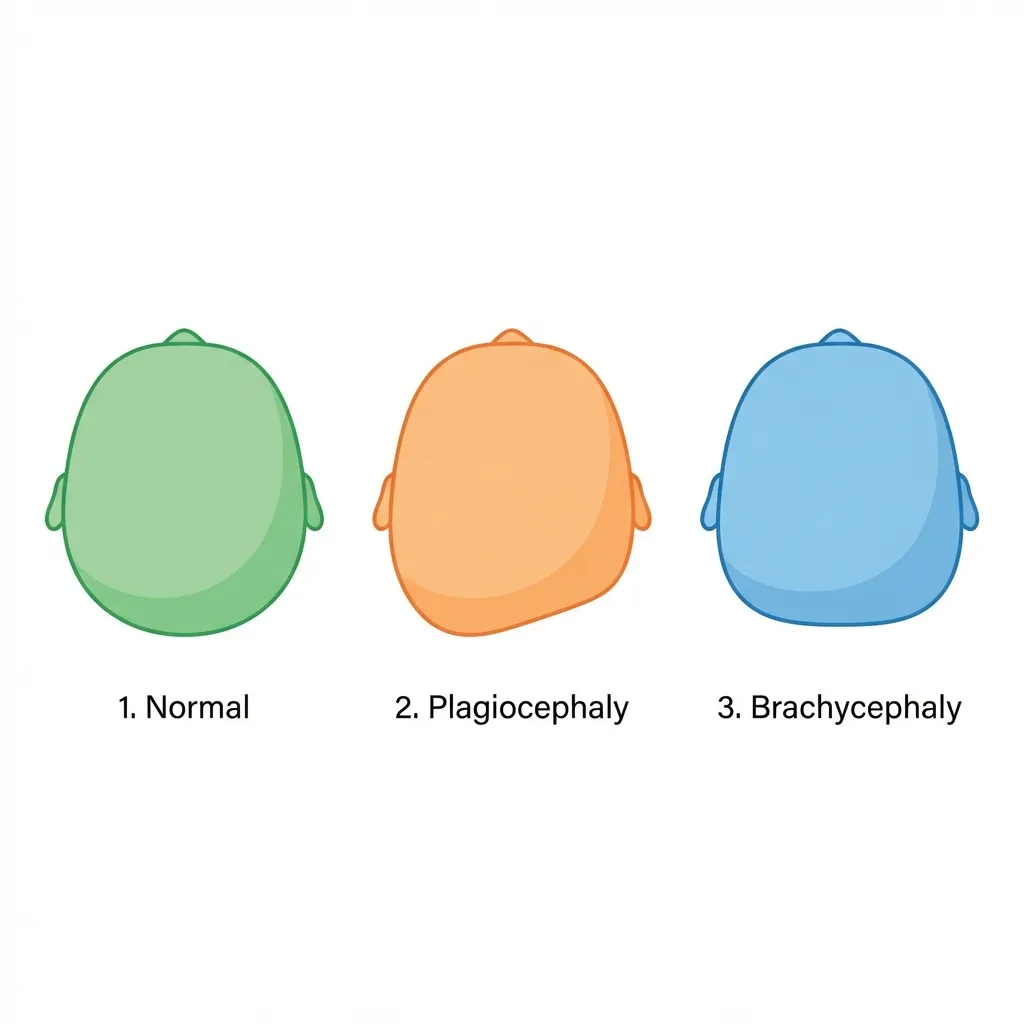
Normal Head
Ears aligned symmetrically and rounded back of the head when viewed from the front.
Plagiocephaly
Flattened on one side and asymmetric like a parallelogram.
Brachycephaly
Flat back of the head and wide on both sides.
Key Features
- Transparent Overlay: Check symmetry precisely by overlaying guidelines over your baby's photo
- Visual Guides: Compare actual head shape models like normal, plagiocephaly, and brachycephaly
- 100% Privacy: Images are processed entirely locally with zero server uploads
- Asymmetry Crosshairs: Visualize asymmetric ratios using markers and rotation tools
- Multiple Image Sources: Use live smartphone cameras or load existing album photos
- Specialist Tips: Learn practical home correction methods like tummy time and baby pillows
- No App Required: Runs instantly on iPhone Safari and Android web browsers
- Free Diagnostic Tool: essential parenting app within the unified management system
Use Cases
- Regular Growth Tracking: Periodically record head shape changes during the 3-6 month golden period
- Pre-check before Clinic Visit: Grasp objective shapes before consulting specialized clinics
- Helmet Therapy Consideration: A lightweight screening before preparing official pediatric documents
- Sleep Posture Check: See if ear height has shifted due to a habit of laying on one side
- Sharing with Co-parents: Explain the degree of baby's asymmetry to family members
- Monitoring Torticollis Signs: Observe cases where the neck tilts constantly leaning on one side
- Post-birth Conehead Monitoring: Observe the restoration process of the postpartum conehead shape
- Important for Twins: Compare twin head shapes and identify imbalances due to lack of womb space
How to Use
- Upload stored photos or take pictures at a right angle directly above the baby's head.
- When the guide marker is overlaid transparently, align the centerline with the baby's nose / ears.
- Diagnose the head shape by checking the aspect ratio and lateral ear angle differences.
- Contrast the findings against the visual guides for normal plagio and brachycephaly to compare features.
- Hit screenshot to capture current progress and monitor changes on a monthly basis.
Specialist's Advice on Home Correction
Your baby's skull is very flexible up to 12 months. Small habits can alter the head shape. The most critical point is not leaving them in one sleeping position for too long. Small efforts by parents can prevent and correct it.
- Change Sleeping Direction: Alternately lay the head direction to the left and right constantly when the baby sleeps deeply.
- Tummy Time: Let them play on their stomach while awake. It builds neck strength and relieves back-head pressure.
- Use Baby Pillows: Prevent a flattened back of the head by using pillows hollowed out in the center.
- Change Mobile Positions: Regularly change the position of the mobile so the baby naturally turns their head in various directions.